Communicable Diseases and Human Defences
What Are Communicable Diseases?
Communicable diseases are illnesses that can be spread from one organism to another. They are caused by pathogens — harmful microorganisms that invade the body and cause infection.
There are four main types of pathogens: bacteria, viruses, fungi, and protists. Each type causes disease in different ways and requires different treatments.
Types of Pathogens
Bacteria are single-celled organisms that can reproduce rapidly inside the body. Some bacteria cause disease by producing toxins that damage tissues. Examples include food poisoning (Salmonella) and gonorrhoea (a sexually transmitted infection).
Bacterial infections can be treated with antibiotics, which kill bacteria or stop them from reproducing.
Viruses are not cells — they are much smaller than bacteria and can only reproduce inside living cells. They take over the cell’s machinery to make copies of themselves, often destroying the cell in the process. Examples include measles, HIV, and tobacco mosaic virus in plants.
Viral infections cannot be treated with antibiotics. Instead, the body’s immune system must fight them off, though antiviral drugs can help in some cases.
Fungi and protists are the other two types of pathogens. Fungi like athlete’s foot affect the skin, while protists such as the malaria parasite are often spread by vectors like mosquitoes.

How Diseases Spread
Pathogens can be transmitted (spread) between organisms in several ways:
- Air: Droplets containing pathogens are released when infected people cough, sneeze, or talk. These can be breathed in by others.
- Water: Contaminated water can contain pathogens that cause diseases like cholera.
- Direct contact: Some diseases spread through touching infected surfaces or direct skin contact.
- Vectors: Animals like mosquitoes can carry pathogens from one host to another.
The spread of communicable diseases can be reduced by hygiene measures, destroying vectors, isolation of infected individuals, and vaccination.
The Body’s Defence Systems
The human body has evolved several defence mechanisms to protect against pathogens. These work as barriers to prevent pathogens entering, or as immune responses to destroy them once inside.
Non-Specific Defences
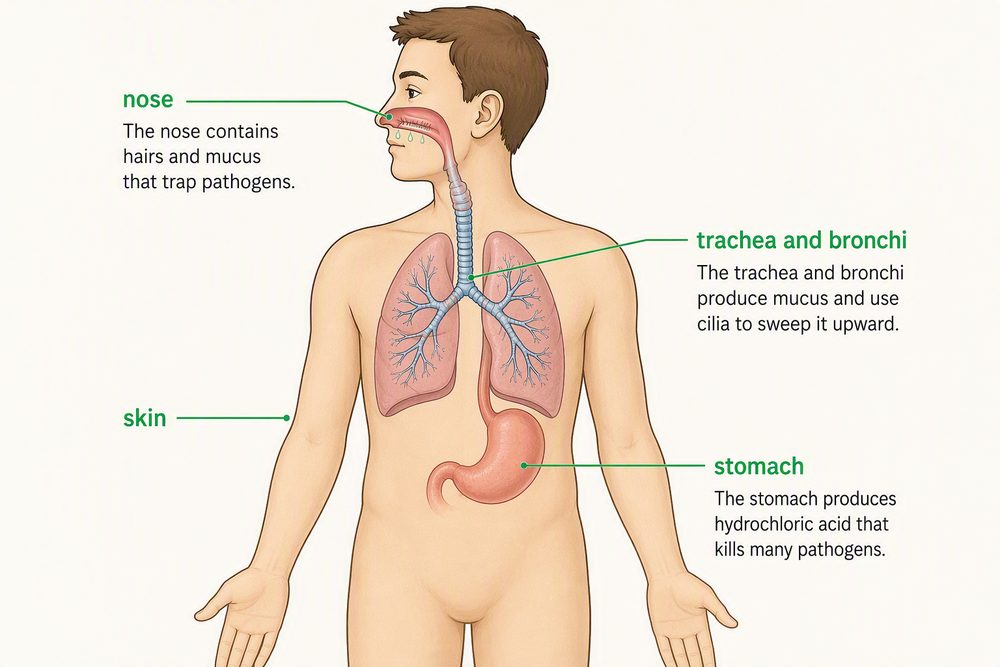
The body’s first line of defence includes physical and chemical barriers:
- Skin: Acts as a physical barrier to prevent pathogens entering the body
- Nose: Contains hairs and mucus that trap particles and pathogens
- Trachea and bronchi: Lined with cells that produce mucus to trap pathogens, and have cilia that sweep mucus upward
- Stomach: Produces hydrochloric acid that kills many pathogens in food and drink
The Immune System
If pathogens get past the body’s barriers, the immune system provides the second line of defence. This involves white blood cells that can detect and destroy pathogens.
Phagocytosis: Some white blood cells engulf and digest pathogens. This is a non-specific response that works against any pathogen.
Antibody production: Other white blood cells produce antibodies. These are proteins that bind to specific antigens on the surface of pathogens.
Antitoxin production: White blood cells can also produce antitoxins that neutralise the toxins released by some bacteria.
Memory Cells and Immunity
When white blood cells encounter a pathogen for the first time, some become memory cells. These remain in the blood for many years and provide immunity.
If the same pathogen enters the body again, memory cells quickly recognise it and produce antibodies much faster than the first time. This rapid response often prevents symptoms of disease from developing — the person is immune.
Primary response: When first exposed to a pathogen, it takes several days for white blood cells to recognise it and start producing the right antibodies. During this time, the person may become ill.
Secondary response: Memory cells enable a much faster and stronger antibody response on second exposure. This usually prevents illness.
Vaccination
Vaccination involves introducing small amounts of dead or inactive pathogens into the body. This stimulates white blood cells to produce antibodies and memory cells without causing disease.
If the person is later infected with the live pathogen, their memory cells will recognise it and quickly produce antibodies. This provides immunity without having to suffer from the disease first.
Vaccination programmes have successfully reduced the incidence of many diseases. However, vaccines need to be updated regularly for diseases like flu because the pathogens mutate and change their antigens.
Antibiotics and Drug Resistance
Antibiotics are medicines that kill bacteria or stop them reproducing. They have dramatically reduced deaths from bacterial infections since their discovery. However, antibiotics do not work against viruses.
The overuse and misuse of antibiotics has led to the evolution of antibiotic-resistant bacteria. These “superbugs” are difficult to treat and pose a serious threat to human health.
To slow the development of antibiotic resistance:
- Doctors should only prescribe antibiotics for bacterial infections
- Patients must complete the full course of antibiotics, even if they feel better
- New antibiotics need to be developed to replace those that no longer work