Variation, Evolution and Natural Selection
Variation
Variation is the differences between individuals of the same species. It can be caused by:
- Genetic variation — differences in DNA inherited from parents. Caused by sexual reproduction (meiosis shuffles genes) and mutations (random changes in DNA).
- Environmental variation — differences caused by the conditions an organism lives in, e.g. diet, climate, lifestyle.
- Combination — most characteristics (e.g. height, weight) are influenced by both genes and environment.
Variation is caused by genetics (inherited from parents), the environment (conditions), or both. Mutations are random changes in DNA that can introduce new alleles. Most mutations have no effect on the phenotype.
Evolution by Natural Selection
Evolution is the gradual change in inherited characteristics of a population over many generations. Charles Darwin proposed the theory of natural selection to explain how evolution occurs:
- Within a population, there is variation in characteristics due to genetic differences.
- Individuals with characteristics better suited to the environment are more likely to survive and reproduce (survival of the fittest).
- These individuals pass on the advantageous alleles to their offspring.
- Over many generations, the proportion of individuals with the advantageous characteristic increases.
Evidence for evolution comes from: fossils (show how organisms have changed over time), antibiotic-resistant bacteria (observed natural selection in action), and comparative anatomy (similar bone structures in different species suggest common ancestors). The fossil record is incomplete because not all organisms fossilise, and many fossils are destroyed by geological processes.
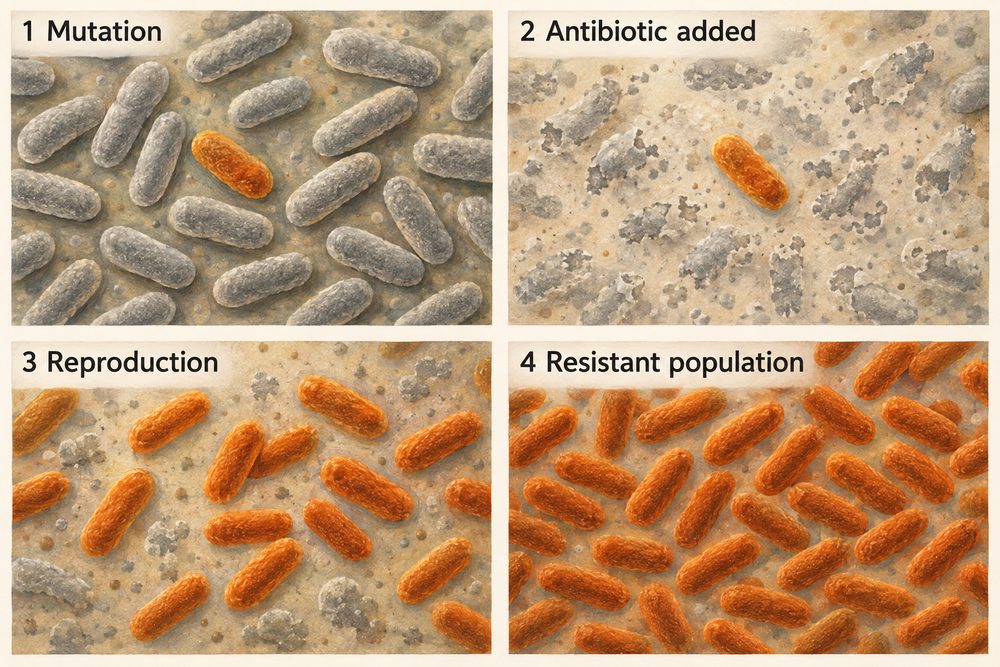
Natural selection: variation → survival of the fittest → advantageous alleles passed on → frequency increases over generations. Evidence includes fossils, resistant bacteria and comparative anatomy.
Selective Breeding and Extinction
Selective breeding (artificial selection) is when humans choose organisms with desirable traits to breed together. Examples include breeding cows for higher milk yield, dogs for specific characteristics, and crops for disease resistance. A disadvantage is that it reduces genetic variation within the population, making it more vulnerable to disease.
Extinction occurs when a species dies out completely. Causes include: new predators or diseases, environmental changes, loss of habitat, competition, and catastrophic events. Carl Linnaeus developed the classification system that organises living things into groups based on shared characteristics: kingdom, phylum, class, order, family, genus, species.