Disease, Pathogens and the Immune Response
Communicable and Non-Communicable Diseases
Communicable diseases are illnesses spread between organisms by pathogens. Non-communicable diseases are not caused by pathogens and cannot be spread. The two categories can interact: a weakened immune system (from a non-communicable condition) makes a person more vulnerable to infections, while chronic infection can trigger inflammatory damage that leads to non-communicable conditions.
There are four main types of pathogen: bacteria, viruses, fungi, and protists. Bacteria cause disease by producing toxins; viruses invade host cells to replicate; fungi and protists use other mechanisms. Each type requires a different treatment approach.
Named Pathogens You Need to Know
Your specification requires you to know a range of named diseases caused by specific pathogens. The table below groups them by pathogen type.
Cholera is caused by the bacterium Vibrio cholerae, spread through contaminated water. It produces toxins that cause severe diarrhoea and rapid dehydration. Treatment is rehydration; clean water supplies prevent spread.
Tuberculosis (TB) is caused by Mycobacterium tuberculosis, spread through airborne droplets. It primarily infects the lungs, causing persistent cough, weight loss and fever. TB is treated with a long course of antibiotics and remains a leading infectious disease globally.
Helicobacter pylori is a bacterium that colonises the stomach lining. It is a major cause of stomach ulcers and is treated with antibiotics combined with acid-reducing medicines.
Chlamydia is a sexually transmitted bacterial infection. It often has no symptoms but can cause reproductive damage if untreated. It is treated with antibiotics and prevented through safe-sex practices.
HIV attacks the immune system’s helper T-cells, destroying the body’s ability to fight infection. Advanced HIV infection, when the immune system is severely compromised, is called AIDS. HIV is spread through unprotected sexual contact, sharing needles, or mother to child. Antiretroviral drugs prevent progression but cannot cure the virus.
Ebola is a viral haemorrhagic fever spread through direct contact with bodily fluids of infected individuals. It causes fever, bleeding and multi-organ failure. Outbreaks are controlled by quarantine, contact tracing and barrier nursing.
Viruses replicate by two cycles. In the lytic cycle, the virus immediately takes over the host cell, replicates rapidly, and bursts the cell to release new viral particles. In the lysogenic cycle, viral DNA integrates into the host cell’s genome and is replicated passively each time the cell divides — it can remain dormant for years before switching to lytic replication.
Chalara ash dieback is caused by the fungus Hymenoscyphus fraxineus. It spreads via windborne spores and has devastated ash tree populations across Europe. There is no effective treatment; management involves removing infected trees to slow spread.
Malaria is caused by the protist Plasmodium, spread by the female Anopheles mosquito acting as a vector. The protist infects and destroys red blood cells, causing fever, chills and anaemia. Prevention focuses on mosquito control (insecticides, bed nets, draining stagnant water); antimalarial drugs reduce severity.
Plant Defences and Plant Pathogens
Plants also suffer from communicable diseases. Pathogens can spread through wind, water, soil and vectors such as insects. Plants defend themselves through physical barriers (the waxy cuticle, cell walls) and chemical defences (antibacterial compounds, toxic secondary metabolites). They also respond to infection with localised cell death to limit the spread of pathogens — a process called the hypersensitive response.
Human non-specific defences include: (1) physical barriers — skin and the mucus-cilia escalator in the airways; (2) chemical barriers — lysozyme in tears and saliva; (3) the inflammatory response — damaged tissues release signals that attract white blood cells to the site of infection.
The Immune Response
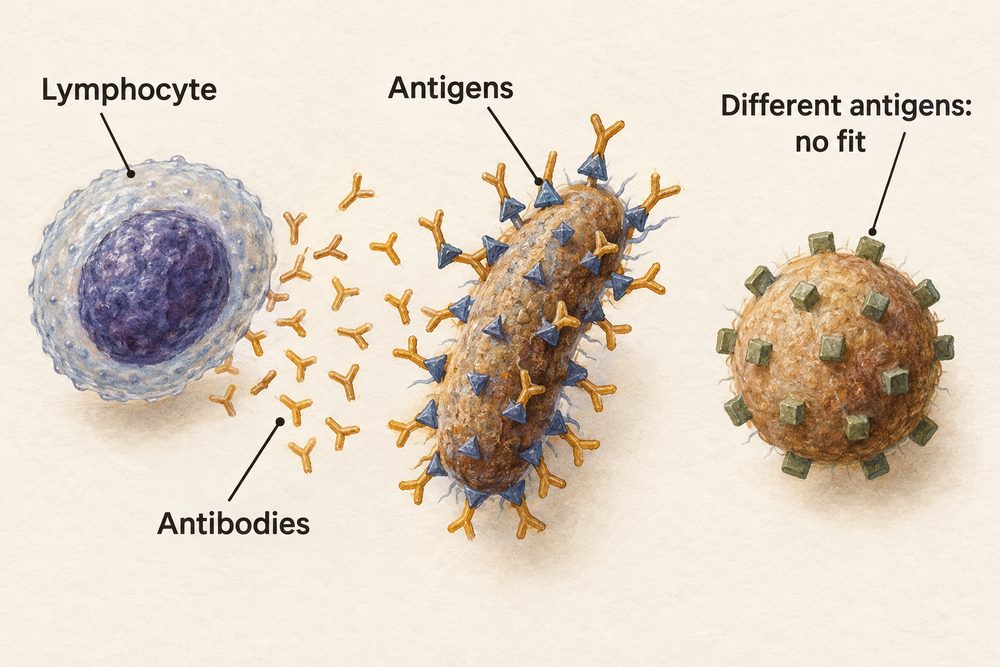
If pathogens breach the non-specific barriers, the specific immune system responds. Pathogens carry molecules on their surfaces called antigens. These antigens are recognised as foreign, triggering white blood cells called lymphocytes to produce antibodies. Each antibody is complementary in shape to one specific antigen.
Antibodies work by: clumping pathogens together so phagocytes can engulf them more easily; neutralising bacterial toxins; and marking pathogens for destruction by other immune cells. This specificity — one antibody shape for one antigen — is the key to the adaptive immune response.
After defeating a pathogen, some lymphocytes persist as memory lymphocytes. These can remain for decades. If the same pathogen enters the body again, memory lymphocytes divide and differentiate rapidly, producing large quantities of the correct antibody far faster than the primary response. This rapid secondary response usually prevents symptoms from developing — the person is immune.
Vaccination and Herd Immunity
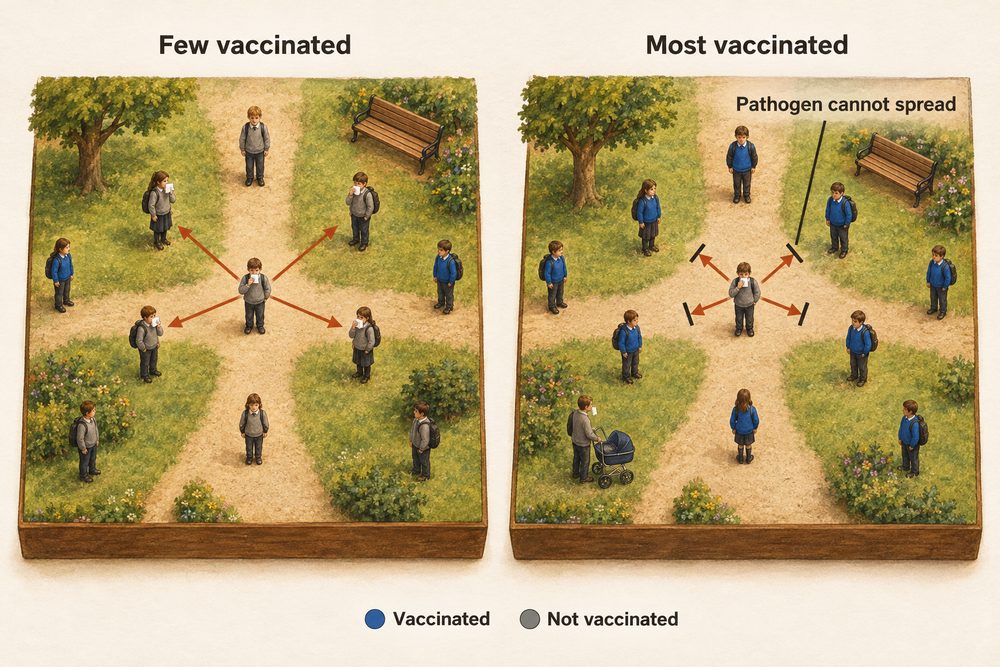
A vaccination introduces antigens into the body without causing the full disease. The immune system responds by producing antibodies and memory lymphocytes. If the vaccinated person later encounters the real pathogen, their memory cells respond so rapidly that infection is prevented.
When enough people in a community are vaccinated, the pathogen cannot spread easily — each infected person is likely to encounter immune individuals who block onward transmission. This is called herd immunity. It protects vulnerable people who cannot receive vaccines, including those with certain medical conditions.
Antibiotics and Aseptic Technique
Antibiotics kill bacteria or prevent their reproduction. They have no effect on viral infections because viruses replicate inside the host’s own cells — an antibiotic that damaged viral replication would damage the host cell too. Antibiotic resistance arises through natural selection: bacteria with random mutations that confer resistance survive, reproduce and pass on resistance genes, especially when courses are not completed or antibiotics are used inappropriately.
Aseptic technique is essential when culturing microorganisms. Key steps include: sterilising equipment before use (using an autoclave to kill all microorganisms at high pressure and temperature); working near a Bunsen flame to create an upward air current that carries contaminants away; flaming the necks of culture vessels before and after opening; and using sterile pipettes and loops. Agar plates must be incubated at no more than 25°C in school settings to prevent growth of dangerous human pathogens.
In the core practical for investigating the effectiveness of antibiotics, antibiotic-soaked discs are placed on bacterial culture plates. The zone of inhibition — the clear area around the disc where bacteria cannot grow — measures the antibiotic’s effectiveness. A larger zone indicates greater effectiveness against that strain.