Medicines, Monoclonal Antibodies and Lifestyle Disease
Discovering and Developing New Drugs
New medicines rarely appear quickly. The journey from a promising compound to a licensed drug typically spans more than a decade. Many potential drugs are discovered by screening natural sources — historically, the painkiller aspirin originated from willow bark compounds, and the heart drug digitalis from foxglove plants. Today, pharmaceutical companies also synthesise new molecules in the laboratory and test them computationally before any biological testing begins.
Drug testing has three stages: (1) preclinical testing on cells, tissues and animals; (2) clinical trials on healthy volunteers then patients, using double-blind placebo-controlled design; (3) peer review and regulatory approval. Each stage must be passed before the next begins.
Stage 1 — Preclinical testing: The drug is tested on cell cultures and isolated tissues to assess toxicity and efficacy. If results are promising, it moves to animal testing, which examines dose, toxicity and pharmacokinetics (how the body processes the drug). Preclinical testing cannot predict all human responses, but it filters out the most dangerous compounds.
Stage 2 — Clinical trials: Phase I involves a small number of healthy volunteers to assess safety and find a safe dose range. Phase II involves patients with the target condition, testing for effectiveness and monitoring side effects at a larger scale. Phase III is a large-scale randomised controlled trial. Double-blind design is used: neither the patient nor the clinician knows who receives the active drug and who receives a placebo. This eliminates placebo effect and observer bias. Results are analysed statistically after the trial is unblinded.
Stage 3 — Peer review and approval: Trial results are submitted to regulatory bodies (such as the Medicines and Healthcare products Regulatory Agency in the UK) and published in peer-reviewed journals. Independent scientists scrutinise the methodology and data before the drug is approved for prescribing.
Monoclonal Antibodies
Monoclonal antibodies are produced by fusing a lymphocyte (which makes a specific antibody but cannot divide indefinitely) with a myeloma cell (a tumour cell that divides without limit but does not make antibodies). The resulting hybridoma cell can both divide without limit and produce a single, specific antibody. Large quantities of identical antibodies are cultured and purified.
Monoclonal antibodies are used in: (1) pregnancy testing — detecting the hormone HCG in urine; (2) cancer diagnosis — binding to tumour antigens to reveal their location; (3) cancer therapy — delivering drugs or radioactive labels directly to tumour cells while sparing healthy tissue.
Pregnancy testing: Early pregnancy is signalled by the hormone human chorionic gonadotrophin (HCG). A home pregnancy test strip contains monoclonal antibodies specific to HCG. If HCG is present in the urine sample, the antibodies bind to it; this complex moves along the test strip and triggers a coloured indicator, giving a positive result. If no HCG is present, no complex forms and the result is negative.
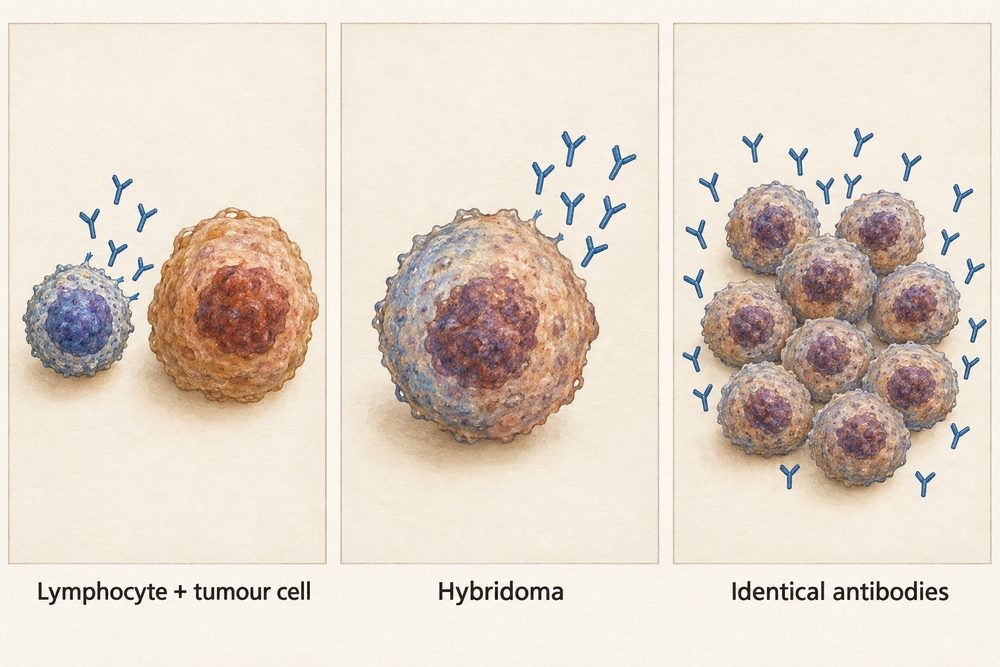
Cancer treatment: Some cancer cells display specific antigens not found on healthy cells. Monoclonal antibodies engineered to bind those antigens can be attached to a chemotherapy drug or a radioactive label. When injected, the antibody ‘seeks out’ cancer cells and delivers the toxic payload directly, reducing the collateral damage to healthy tissue that traditional chemotherapy causes. This is sometimes called targeted or ‘magic bullet’ therapy.
Limitations: Producing monoclonal antibodies is expensive and technically complex. They can cause unwanted immune reactions in some patients, and finding a tumour antigen unique enough to target without affecting healthy cells is difficult. Their development has raised ethical questions, particularly around the use of mice to generate the initial lymphocytes.
Non-Communicable Diseases: BMI and Obesity
Body mass index (BMI) is a widely used measure to classify whether a person’s mass is in a healthy range for their height. It is calculated as:
$$\text{BMI} = \frac{\text{mass (kg)}}{\text{height (m)}^2}$$
For adults, a BMI of 18.5–24.9 is generally considered healthy; 25–29.9 is classed as overweight; 30 or above is classed as obese. BMI is a screening tool, not a diagnostic measure. It does not distinguish between fat mass and muscle mass, so it can misclassify very muscular individuals. Waist-to-hip ratio is an alternative measure that better reflects abdominal fat distribution and associated health risk.
The relationship between obesity and disease is a correlation, not a simple linear cause. Obesity raises the risk of type 2 diabetes, cardiovascular disease, some cancers and joint problems. However, not all obese individuals develop these conditions and some non-obese individuals do. Other variables — genetics, diet quality, activity level, socioeconomic status — interact with mass to determine health outcomes. Distinguish between correlation and causation in data questions.
Cardiovascular Disease
Cardiovascular disease (CVD) is one of the leading non-communicable causes of mortality. It is strongly associated with lifestyle risk factors: a diet high in saturated fat and salt, physical inactivity, smoking, obesity, high blood pressure and high blood cholesterol. Fatty deposits build up in the walls of the coronary arteries over time — this is called atherosclerosis — narrowing the lumen and restricting blood flow to the heart muscle.
Statins are drugs that reduce blood cholesterol by blocking the enzyme responsible for its synthesis in the liver. Lower cholesterol slows the build-up of fatty plaques in the arteries. Statins are taken daily, reduce the risk of heart attacks and strokes, but can cause side effects including muscle pain in some patients.
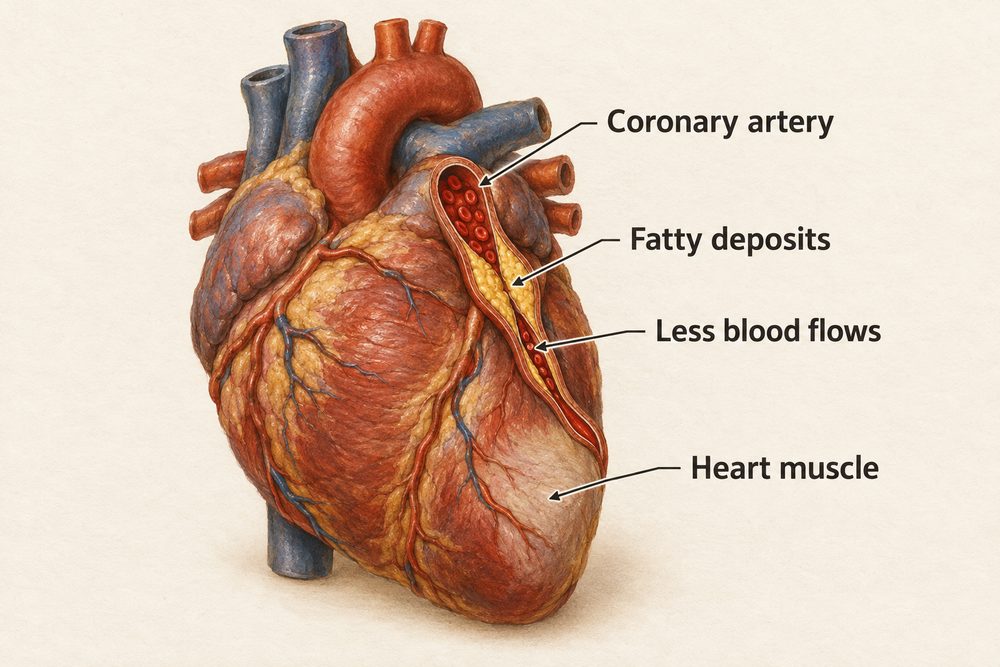
Stents are small metal mesh tubes inserted into a narrowed coronary artery during keyhole surgery to prop it open and restore blood flow. Stents provide immediate relief but do not prevent further plaque build-up in other vessels. Patients may need to take blood-thinning drugs after stent insertion.
More invasive options include coronary artery bypass surgery, where a healthy blood vessel from another part of the body is grafted to bypass the blocked section. In severe cases, an artificial or donor heart may be considered. All surgical interventions carry risk; lifestyle changes (diet, exercise, stopping smoking) remain the most effective primary prevention.
Statins lower blood cholesterol by inhibiting the enzyme that synthesises it in the liver — reducing the rate of plaque formation in arteries. Stents mechanically prop open narrowed arteries. Both reduce cardiovascular risk but neither reverses existing damage; lifestyle change prevents further progression.