Growth, Stem Cells and Plant Hormones
Cell Division and Growth
Multicellular organisms grow by increasing their number of cells through cell division and by increasing cell size. The type of cell division responsible for growth, repair and replacement of worn-out cells is mitosis. Before mitosis, during interphase, the cell copies all of its DNA, so each chromosome exists in duplicate. During mitosis the chromosome copies separate and the cell divides — one complete set of chromosomes goes to each daughter cell. The result is two cells genetically identical to the parent.
The cell cycle consists of two main phases: interphase (the long period of cell growth, DNA replication and organelle doubling) followed by mitosis and cell division. Most cells spend the vast majority of their time in interphase rather than actively dividing.
Mitosis produces two genetically identical daughter cells from one parent cell. It is used for growth, repair of damaged tissue and replacement of ageing cells. Each daughter cell receives a full copy of the parent cell’s chromosomes.
Stem Cells: Undifferentiated and Versatile
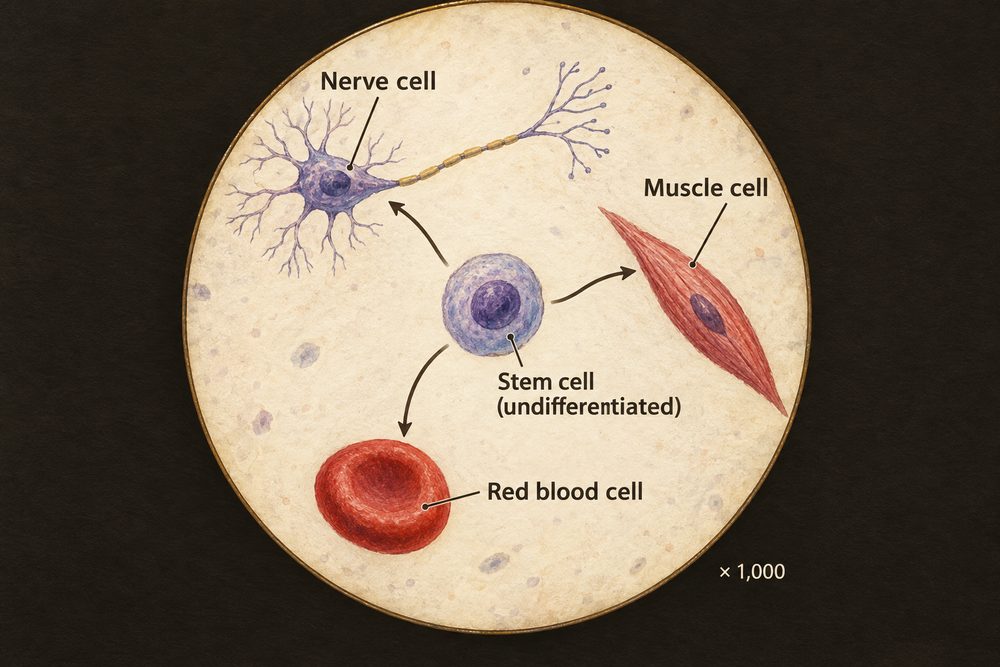
Stem cells are cells that have not yet specialised. Unlike most body cells (which can only carry out one function), stem cells can divide repeatedly and then differentiate — change into a specialised cell type. There are two main categories:
- Embryonic stem cells — found in the early embryo. They are pluripotent, meaning they can become almost any cell type in the body. This makes them highly useful for potential therapeutic applications.
- Adult stem cells — found in specific tissues such as bone marrow and the lining of the gut. They are more restricted than embryonic stem cells and can only differentiate into a limited range of cell types. Bone marrow stem cells, for instance, produce red blood cells, white blood cells and platelets.
Stem cell therapy involves using stem cells to repair or replace damaged or diseased tissue. Bone marrow transplants are an established therapy — donor stem cells are transplanted into patients whose bone marrow has been destroyed (for example, by leukaemia treatment) to restore blood cell production. Researchers are also investigating using stem cells to replace insulin-producing cells in type 1 diabetes, restore nerve function after spinal cord injury, and repair heart muscle after a heart attack.
These potential applications are promising, but most are still in clinical trial stages. Risks include immune rejection of transplanted cells and the possibility that transplanted stem cells may divide uncontrollably, potentially causing cancer.
The Ethics of Stem Cell Research
This is a topic where scientific capability meets ethical judgement — a core example of the ‘Should we do this?’ question that science alone cannot answer. The debate around stem cell therapy centres on embryonic stem cells.
Arguments for using embryonic stem cells: could cure currently untreatable diseases; embryos used are typically surplus from IVF treatment (would otherwise be destroyed); potential to save many lives. Arguments against: the embryo is a potential human life and should not be used as a research tool; adult stem cells or induced pluripotent stem cells (iPSCs) may offer alternatives; risks of uncontrolled cell division.
In the UK, research using human embryos is permitted up to 14 days after fertilisation and is regulated by the Human Fertilisation and Embryology Authority (HFEA). This is an example of science being regulated through democratic and legal frameworks rather than being left entirely to scientific or commercial discretion.
Differentiation in Plants: Meristem Tissue
Unlike animals, in which differentiation is largely complete by adulthood, plants retain the ability to produce new cells throughout their lives. This is because plants have meristem tissue at their growing tips — both root tips and shoot tips. Meristem cells are essentially the plant equivalent of stem cells: they can divide repeatedly by mitosis and then differentiate into whatever cell type the growing plant needs (root hair cells, xylem vessels, leaf cells and so on).
This is why gardeners can take cuttings from plants and grow new, genetically identical plants from them. A cut stem has meristem tissue that can be stimulated to produce roots using rooting powder, which contains synthetic plant hormones (Higher tier). This allows the cutting to develop into a complete new plant. This technique is widely used in horticulture and agriculture to propagate high-quality varieties reliably.
Plant Hormones: Auxin and Tropisms
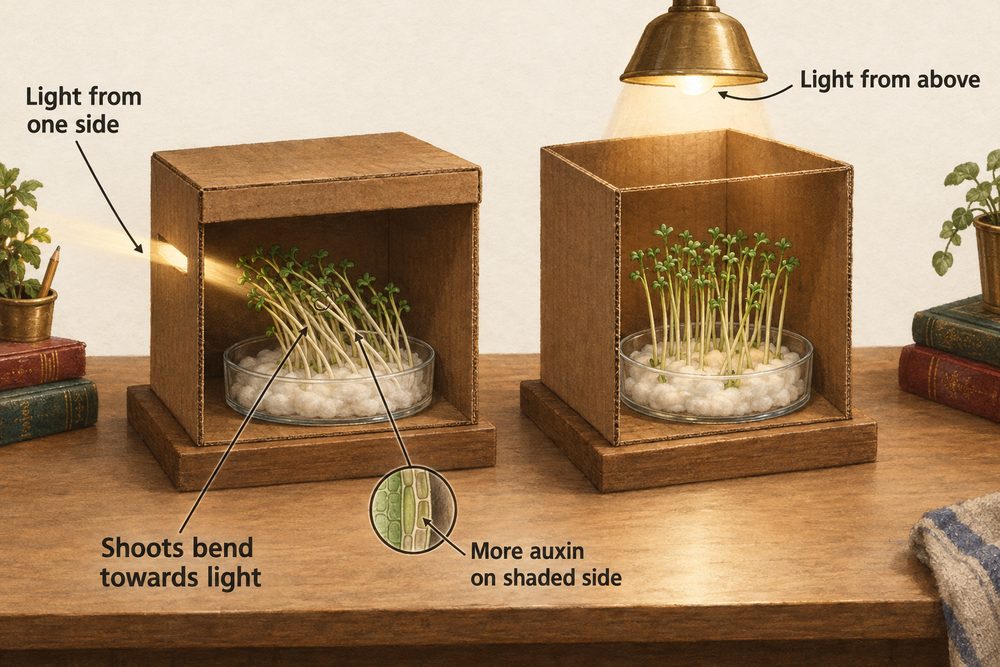
Auxin is a plant hormone produced at the growing tips of shoots. It controls how cells elongate: higher concentrations of auxin cause cells to elongate more. This leads to directional growth responses called tropisms.
In phototropism (growth response to light), auxin moves away from the light side of the shoot tip to the shaded side. The shaded side therefore has more auxin, causing its cells to elongate faster — the shoot bends towards the light. This is an adaptive response that maximises light capture for photosynthesis.
In gravitropism (growth response to gravity), auxin accumulates on the lower side of a root or shoot. In roots, high auxin concentrations inhibit elongation (roots are more sensitive to auxin), so the upper side elongates more and roots grow downward. In shoots, auxin promotes elongation, so shoots grow upward against gravity.
Synthetic versions of auxin are used as selective weedkillers: they cause broadleaf weeds to grow so rapidly that they die, while narrow-leaved grasses (including crops) are much less affected. Auxin-based rooting powders are used by horticulturalists to stimulate cuttings to form roots. Other plant hormones such as gibberellins are used to promote seed germination and fruit development in commercial horticulture.