Gene Technology and Ethics
What Can We Learn From the Human Genome?
When scientists compare the genomes of people who have a particular disease with those who do not, they can identify alleles that are associated with increased risk of developing that condition. This growing knowledge of human genetic variants is opening up new possibilities in medicine — but it also raises difficult questions about how that information should be used and by whom.
Genetic testing allows doctors, patients and families to identify whether particular alleles are present. Testing can be carried out on adults, children, foetuses (using cells from the amniotic fluid) and even embryos created through IVF. Some tests look for alleles that cause a condition when inherited; others identify alleles that increase risk without certainty. Identifying ‘carrier’ status is also possible — a person who carries one copy of a recessive disease allele (and is unaffected) may pass it on to children who inherit two copies. And personalised medicine uses genetic information to match a drug or dosage to the patient’s own genome, improving effectiveness and reducing side effects.
Genetic testing has three main medical uses: informing family planning (identifying carriers of recessive alleles), assessing individual disease risk (e.g. alleles strongly associated with certain cancers), and enabling personalised medicine (matching drug treatments to a patient’s genetic profile so drugs work effectively).
How Genetic Engineering Works
Genetic engineering involves deliberately modifying an organism’s genome. The process follows a sequence of steps:
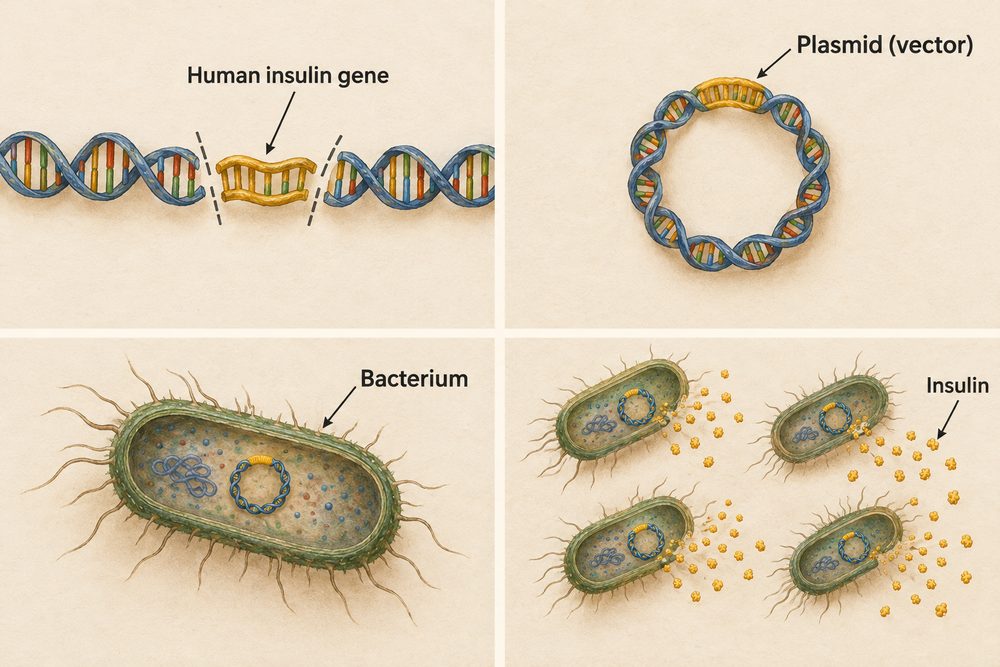
Step 1 — Isolate the gene: The gene that codes for the desired protein is identified and cut from the donor organism’s DNA. Enzymes are used to cut the DNA at specific sequences.
Step 2 — Insert into a vector: The isolated gene is inserted into a vector, which is a carrier molecule that can transport the gene into a new cell. A common vector is a bacterial plasmid — a small circular ring of DNA that can be introduced into bacterial cells.
Step 3 — Deliver to host cells: The vector carries the gene into the cells of the target organism. Once inside, the gene integrates into the host’s genome or is expressed alongside it.
Step 4 — Select modified cells: Not every cell will have taken up the gene successfully. Scientists use selection techniques to identify which cells now carry and express the desired gene, and culture these cells to produce the genetically modified organism (GMO).
Applications: Medicine and Agriculture
Genetic engineering has produced practical applications in both medicine and agriculture. In medicine, genetically modified bacteria are used to produce proteins that humans need but cannot easily obtain in large quantities. In agriculture, crop plants have been modified to carry genes conferring resistance to pests, tolerance to drought, or enhanced nutritional content.
Human insulin production: People with type 1 diabetes cannot produce insulin. The human insulin gene has been inserted into bacterial plasmids; the modified bacteria are cultured in large fermenters and produce human insulin that is purified for medical use. This replaced older methods of extracting insulin from animal sources, which sometimes caused immune reactions in some patients.
Golden Rice: A variety of rice has been engineered to produce beta-carotene, a precursor of vitamin A, in its edible grain. The aim is to address vitamin A deficiency, which can cause blindness in children in regions where rice is the dietary staple. However, debate continues about whether it addresses root causes of malnutrition or whether other approaches would be more effective.
GM mosquitoes: Mosquitoes modified to carry a self-limiting gene have been released in controlled programmes to reduce wild mosquito populations that spread malaria and dengue fever. Male GM mosquitoes mate with wild females; offspring carrying the gene do not survive to reproduce, causing population decline. Field trials have been conducted in several countries; long-term effects on ecosystems are still being monitored.
Genetic engineering applications include the production of human insulin by modified bacteria (medicine) and pest-resistant GM crops (agriculture). Both areas involve weighing real benefits against potential risks, with regulatory frameworks in place to manage those risks.
Evaluating Gene Technology: Risks, Benefits and Ethics
Gene technology generates significant benefits — improved medicines, more resilient crops, potential treatments for inherited conditions — but it also introduces risks and ethical concerns that must be weighed carefully. This is a classic example of where scientific knowledge has to be considered alongside societal values, regulatory oversight, and the rights of individuals and communities.
Genetic testing — benefits: people can make informed decisions about family planning; personalised medicine can improve treatment outcomes; early knowledge allows preventive steps to reduce disease risk.
Genetic testing — risks: false positives or false negatives can cause unnecessary distress or false reassurance; pre-natal testing carries a small risk of miscarriage if amniotic fluid sampling is used; there are concerns about genetic discrimination by employers or insurers; individuals may not wish to know their genetic risk.
Genetic engineering — benefits: production of medicines in large, reliable quantities; crops engineered for resistance, yield, or nutritional content could help feed a growing global population; potential future gene therapies for inherited conditions.
Genetic engineering — risks: inserted genes could spread to other species via horizontal gene transfer or cross-pollination; long-term ecological effects may be difficult to predict; some people have moral objections to modifying genomes, particularly in animals or humans; corporate control of patented GM crops raises concerns about food security.
Regulatory bodies exist to weigh these factors and set rules about what applications are approved. The key principle is that benefits must outweigh risks, and that decisions should be transparent and subject to democratic scrutiny.