Monoclonal Antibodies
What Are Monoclonal Antibodies?
Monoclonal antibodies are identical copies of one specific antibody. They are produced from a single clone of cells, so every antibody molecule is exactly the same and binds to the same specific antigen. This makes them extremely useful in medicine and research.
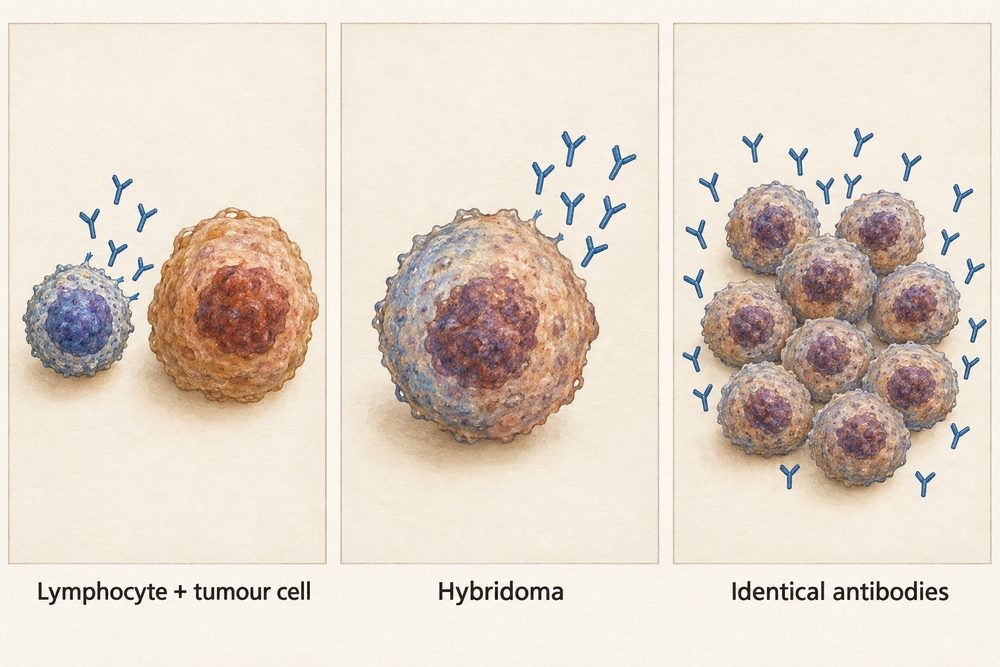
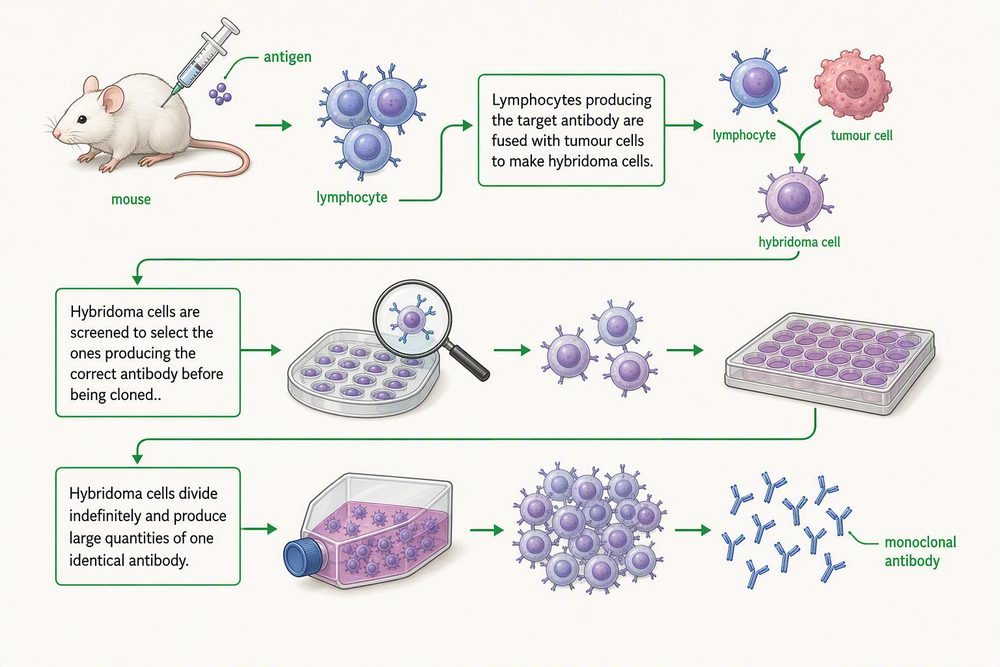
Monoclonal antibodies are produced by stimulating mouse lymphocytes to make a specific antibody, then fusing those lymphocytes with tumour cells to create hybridoma cells that divide indefinitely and produce large quantities of the desired antibody.
Producing Monoclonal Antibodies
The production of monoclonal antibodies is a multi-step process:
- A mouse is injected with the target antigen. Its immune system responds by producing lymphocytes that make antibodies against that antigen.
- The antibody-producing lymphocytes are collected from the mouse’s spleen.
- These lymphocytes are fused with tumour cells (which divide rapidly and indefinitely) to form hybridoma cells.
- The hybridoma cells are screened to select those that produce the correct antibody.
- Selected hybridoma cells are cloned and grown in large quantities. They produce vast amounts of the identical monoclonal antibody.
Normal lymphocytes die after a short time outside the body. Tumour cells, however, divide uncontrollably and can survive indefinitely in culture. By fusing a lymphocyte (which makes the right antibody) with a tumour cell (which can divide forever), scientists create a hybridoma that combines both properties — it produces the correct antibody and never stops dividing.
Uses of Monoclonal Antibodies
Because monoclonal antibodies bind to one specific antigen with very high precision, they have a wide range of applications:
Pregnancy Testing
HCG (human chorionic gonadotrophin) is a hormone produced during pregnancy. Pregnancy test sticks contain monoclonal antibodies that bind to HCG in urine. If HCG is present, the antibodies trigger a colour change, producing a positive result.
Diagnosis of Disease
Monoclonal antibodies can detect specific molecules in blood or tissue samples. For example, they can identify the presence of a pathogen or a specific protein linked to a disease. In cancer diagnosis, monoclonal antibodies labelled with a radioactive tracer or fluorescent dye can bind to tumour-specific antigens, allowing doctors to locate tumours in the body through imaging.
In cancer treatment, monoclonal antibodies can be designed to carry a toxic drug, radioactive substance, or chemical directly to cancer cells. This is targeted therapy — it delivers the treatment only to the tumour, reducing damage to healthy tissue compared with chemotherapy.
Scientists use monoclonal antibodies to locate and identify specific molecules in cells and tissues. They can be tagged with fluorescent dyes, allowing researchers to visualise exactly where a particular protein is within a cell. This technique is invaluable in laboratory research for understanding cell biology and disease mechanisms.
Limitations and Ethical Concerns
Monoclonal antibodies were expected to be more widely used than they currently are. There are limitations:
- They can cause unexpected side effects in some patients, which are sometimes more severe than the disease itself.
- They are expensive to develop and produce.
- They do not yet produce the miracle cures that were initially hoped for.
There are also ethical concerns about the use of animals (mice) in the production process, as mice must be injected with antigens to stimulate antibody production.
Monoclonal antibody treatment is an example of targeted therapy because it delivers the drug mainly to the diseased cells, so it damages less healthy tissue than chemotherapy does.