The Heart, Blood and Circulatory Disease
The Heart
The heart is a muscular organ that pumps blood around the body through a double circulatory system. The right side of the heart pumps deoxygenated blood to the lungs (pulmonary circuit). The left side pumps oxygenated blood to the rest of the body (systemic circuit).
The heart has four chambers: two upper atria (singular: atrium) that receive blood, and two lower ventricles that pump blood out. The left ventricle has a thicker muscular wall than the right because it needs to generate higher pressure to pump blood around the entire body, whereas the right ventricle only pumps blood to the nearby lungs.
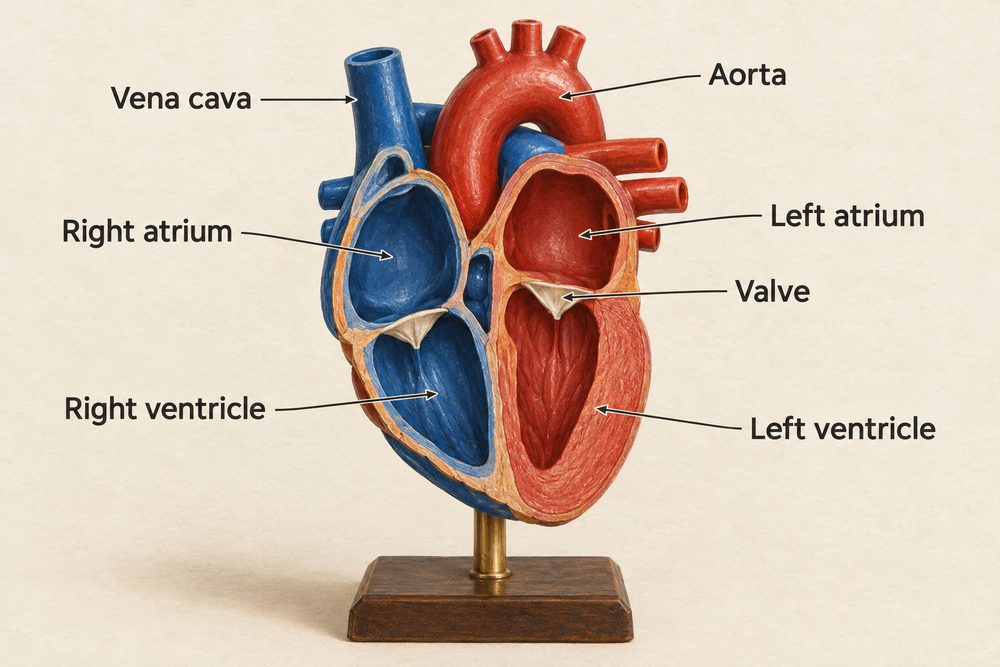
The heart has four chambers. Blood flows: vena cava → right atrium → right ventricle → pulmonary artery → lungs → pulmonary vein → left atrium → left ventricle → aorta → body.
Valves in the heart prevent the backflow of blood. The coronary arteries supply the heart muscle with the oxygenated blood it needs to keep beating.
Blood Vessels
There are three types of blood vessel:
- Arteries — carry blood away from the heart at high pressure. They have thick, muscular, elastic walls.
- Veins — carry blood back to the heart at low pressure. They have thinner walls and contain valves to prevent backflow.
- Capillaries — tiny vessels that connect arteries to veins. Their walls are one cell thick, allowing efficient exchange of substances (oxygen, glucose, carbon dioxide) with body tissues.
Blood Components
Blood is a tissue made up of four components:
- Red blood cells — contain haemoglobin, which binds to oxygen. They have a biconcave disc shape to increase surface area and no nucleus to carry more haemoglobin.
- White blood cells — part of the immune system. Phagocytes engulf pathogens; lymphocytes produce antibodies.
- Platelets — cell fragments that help blood to clot at wound sites, forming a scab to prevent blood loss and infection.
- Plasma — the liquid part of blood. It transports dissolved substances including carbon dioxide, urea, hormones and glucose.
Coronary heart disease (CHD) occurs when layers of fatty material (atheroma) build up inside the coronary arteries, reducing blood flow to the heart muscle. This can cause a heart attack if the heart muscle does not receive enough oxygen.
Treatments include: stents (wire mesh tubes inserted to hold the artery open), statins (drugs that reduce blood cholesterol levels and slow the build-up of fatty deposits), and in severe cases, heart transplants or artificial hearts (mechanical devices that keep blood flowing while waiting for a transplant).
Coronary heart disease is caused by fatty deposits narrowing the coronary arteries. Treatments include stents (hold arteries open), statins (lower cholesterol), heart transplants and artificial hearts.
Stents are effective but carry risks of infection and blood clots. Statins must be taken long-term and can cause side effects such as headaches and muscle pain. Artificial hearts are temporary and can cause blood clots or infection. Heart transplants are limited by donor availability and the risk of rejection by the immune system.