Vaccination, Antibiotics and Drug Development
Vaccination
A vaccination introduces a small quantity of dead or inactive forms of a pathogen into the body. This stimulates the white blood cells (lymphocytes) to produce antibodies. If the same pathogen enters the body again in the future, the white blood cells can respond rapidly and produce the correct antibodies much faster, preventing infection.
Vaccines stimulate the immune system to produce antibodies by introducing dead or weakened pathogens. Memory lymphocytes remain, allowing a rapid secondary immune response if the pathogen is encountered again.
If a large proportion of the population is vaccinated, the spread of the pathogen is greatly reduced because there are fewer people who can become infected and pass it on. This is called herd immunity.
Antibiotics and Painkillers
Antibiotics are medicines that kill bacteria or prevent them from reproducing inside the body. They are used to treat bacterial infections. Antibiotics do not work on viruses because viruses reproduce inside the host’s own cells, and it is very difficult to damage the virus without also damaging the host cell.
Painkillers treat the symptoms of disease (e.g. pain, inflammation) but do not kill pathogens. They make the patient feel better but do not cure the infection itself.
Some bacteria have developed antibiotic resistance through natural selection. Mutations in bacterial DNA can produce strains that are not killed by an antibiotic. These resistant bacteria survive and reproduce, passing on the resistance gene. Overuse of antibiotics and failure to complete courses accelerates this process.
MRSA (methicillin-resistant Staphylococcus aureus) is an example of a “superbug” that is resistant to several antibiotics. To reduce the development of resistant strains, doctors should only prescribe antibiotics when necessary, patients should always complete the full course, and the agricultural use of antibiotics should be restricted.
Drug Development and Testing
New drugs must go through rigorous testing before they can be used. The stages are:
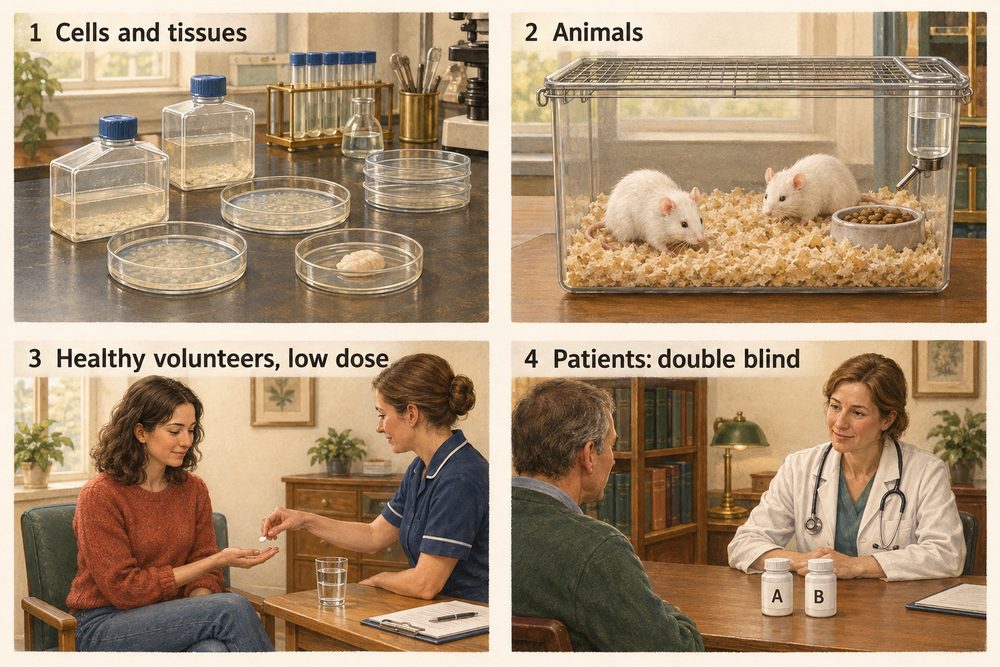
Stage 1 — Preclinical testing: The drug is tested on cells, tissues and live animals. This checks for toxicity (is it safe?), efficacy (does it work?) and dose (how much is needed?).
Stage 2 — Clinical trials: If preclinical tests are successful, the drug is tested on healthy volunteers and then on patients. A very low dose is given first to check for side effects. Double-blind trials are used where neither the patient nor the doctor knows who receives the real drug and who receives a placebo (an inactive substance). This eliminates bias.
Stage 3 — Peer review and approval: Results are reviewed by independent scientists and regulatory bodies before the drug is approved for widespread use.
Drug testing stages: preclinical (cells, tissues, animals) → clinical trials (healthy volunteers, then patients, using double-blind placebo trials) → peer review and approval. This process typically takes over 10 years.
Many drugs were originally discovered in plants or microorganisms. For example, the painkiller aspirin was originally derived from willow bark, the heart drug digitalis comes from foxgloves, and the antibiotic penicillin was discovered from a mould by Alexander Fleming in 1928.