The Endocrine System and Blood Glucose Control
The Endocrine System
The endocrine system is made up of glands that produce hormones. Hormones are chemical messengers secreted directly into the blood and carried to target organs where they produce an effect. Compared to the nervous system, hormonal responses are slower but longer-lasting and act on a wider area.
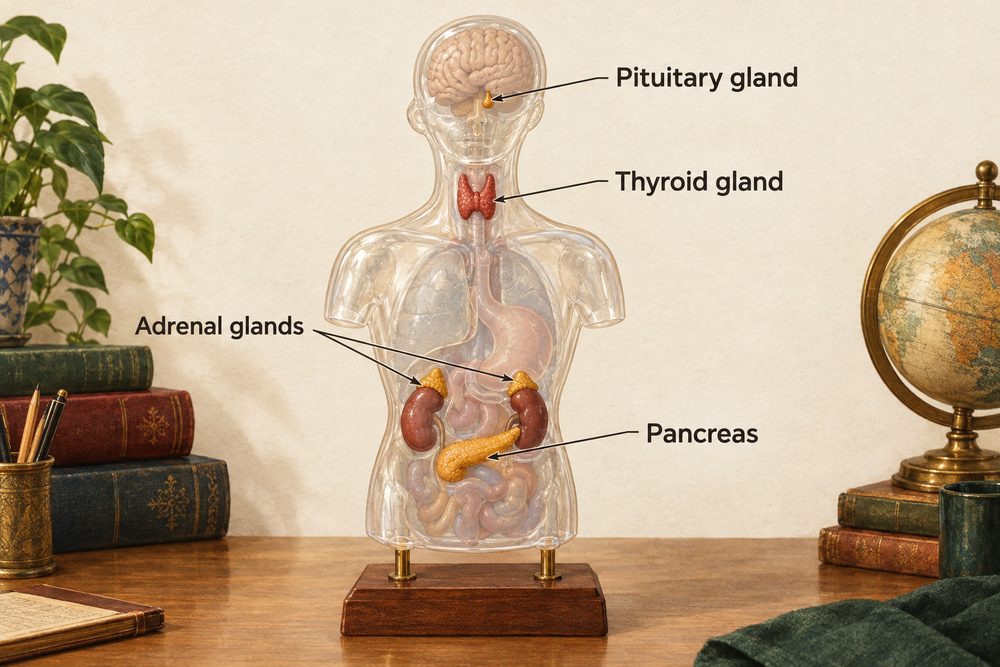
The pituitary gland in the brain is called the “master gland” because it produces hormones that act on other glands, stimulating them to release their own hormones. Key endocrine glands include:
- Pituitary gland (brain) — produces growth hormone, FSH, LH, ADH, TSH.
- Thyroid gland (neck) — produces thyroxine, which regulates metabolic rate.
- Pancreas — produces insulin and glucagon to control blood glucose.
- Adrenal glands (above kidneys) — produce adrenaline for the “fight or flight” response.
- Ovaries — produce oestrogen and progesterone.
- Testes — produce testosterone.
The pituitary gland is the “master gland” — it produces hormones that control other glands. Hormones travel in the blood to target organs and produce slower but longer-lasting responses than nerves.
Blood Glucose Control
Blood glucose concentration is monitored and controlled by the pancreas. When blood glucose rises (e.g. after eating), the pancreas releases insulin. Insulin causes glucose to move from the blood into cells, and stimulates the liver to convert glucose into glycogen for storage. This lowers blood glucose back to normal.
When blood glucose falls too low (e.g. during exercise or between meals), the pancreas releases glucagon. Glucagon causes the liver to convert glycogen back into glucose, which is released into the blood. This raises blood glucose back to normal. This is a classic example of negative feedback.
Insulin lowers blood glucose (glucose → glycogen in liver). Glucagon raises blood glucose (glycogen → glucose from liver). Both are produced by the pancreas in a negative feedback loop.
Type 1 diabetes is a condition where the pancreas produces little or no insulin. It is usually diagnosed in childhood, is not linked to lifestyle, and is treated with insulin injections. The patient must also monitor their diet and blood glucose levels.
Type 2 diabetes is where the body’s cells no longer respond to insulin properly (insulin resistance). It is linked to obesity and lifestyle factors. It is treated with a carbohydrate-controlled diet, increased exercise and sometimes medication. Type 2 diabetes is becoming more common worldwide due to rising obesity levels.
The nervous system transmits electrical impulses along neurones for fast, short-lived, localised responses. The endocrine system uses hormones carried in the blood for slower, longer-lasting, widespread responses. Both systems work together to coordinate body functions — for example, the hypothalamus in the brain links the two systems.