Reproduction, Meiosis and DNA
Sexual and Asexual Reproduction
There are two types of reproduction. Sexual reproduction involves the fusion (joining) of male and female gametes (sperm and egg). The offspring are genetically different from each other and from both parents, because they receive a random mix of genetic material. This genetic variation is important for natural selection.
Asexual reproduction involves only one parent and no fusion of gametes. The offspring are genetically identical to the parent — they are clones. Asexual reproduction occurs through mitosis. Many plants, bacteria and some animals (e.g. starfish) can reproduce asexually.
Sexual reproduction: two parents, gametes fuse, offspring are genetically varied. Asexual reproduction: one parent, mitosis only, offspring are clones. Variation in sexual reproduction is important for natural selection and survival.
Meiosis
Meiosis is the type of cell division that produces gametes (sex cells). It takes place in the reproductive organs (ovaries and testes). Before meiosis, the DNA replicates. The cell then divides twice, producing four genetically different haploid cells, each with half the chromosome number (23 in humans).
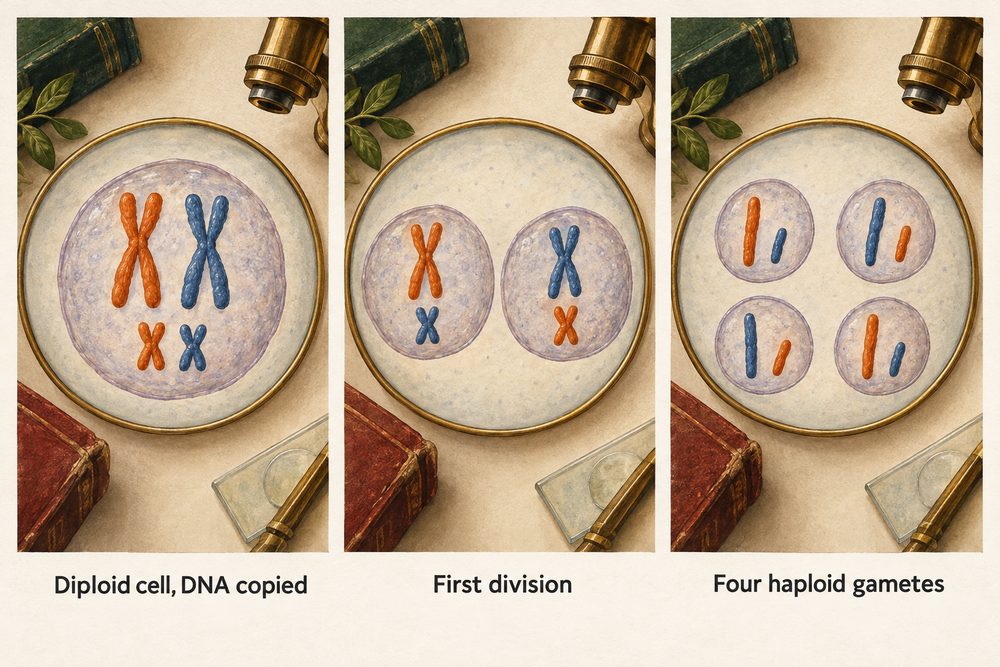
When two gametes fuse at fertilisation, the full chromosome number is restored (46 in humans). The resulting cell is called a zygote, which then divides by mitosis to form an embryo.
Mitosis: one division, produces 2 identical diploid cells, used for growth and repair. Meiosis: two divisions, produces 4 different haploid cells (gametes), used for sexual reproduction. Both start with DNA replication, but meiosis shuffles genetic material, creating variation.
DNA Structure
DNA (deoxyribonucleic acid) is a polymer made up of two strands twisted into a double helix. DNA is found in the nucleus of cells, arranged into structures called chromosomes. Humans have 23 pairs of chromosomes (46 total).
A gene is a short section of DNA on a chromosome. Each gene codes for a particular sequence of amino acids, which are assembled into a specific protein. The entire set of genetic material in an organism is called its genome.
DNA is a double helix found in chromosomes in the nucleus. A gene is a section of DNA that codes for a protein. Humans have 23 pairs of chromosomes. The Human Genome Project mapped all human DNA.
The Human Genome Project was an international effort to map every gene in the human genome. Understanding the genome helps scientists identify genes linked to specific diseases, develop personalised medicines, and trace human migration patterns and evolutionary relationships.