Genetic Engineering and Ecology
Genetic Engineering
Genetic engineering is a process where scientists modify the genetic material of an organism. A gene that codes for a useful characteristic is “cut” from one organism’s DNA and inserted into another organism’s genome. The organism that receives the new gene is called a genetically modified organism (GMO).
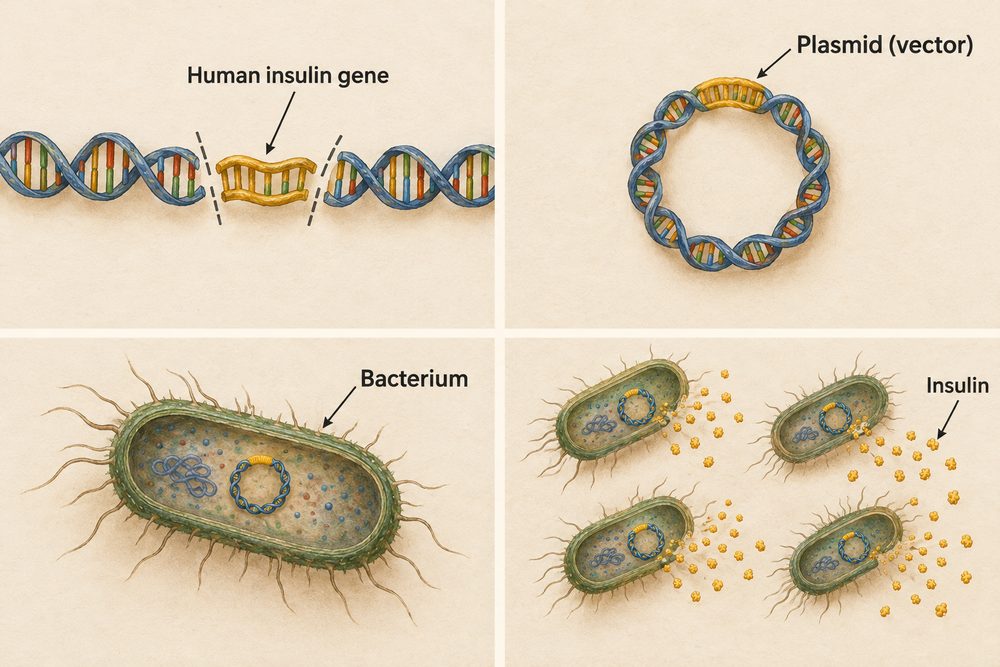
In genetic engineering, enzymes are used to isolate the required gene. This gene is then inserted into a vector (such as a bacterial plasmid or virus) which carries it into the cells of the target organism. The organism’s cells then produce the desired protein.
The process of genetic engineering follows a clear sequence of steps. First, the gene that produces the desired characteristic is identified and isolated using restriction enzymes, which cut DNA at specific recognition sequences. The gene is then inserted into a vector — typically a small ring of bacterial DNA called a plasmid. The vector carries the gene into the host organism’s cells, where it is incorporated into the DNA and expressed to produce the desired protein.
One of the most important applications is the production of human insulin by genetically modified bacteria. The human insulin gene is inserted into bacterial plasmids, and the bacteria then produce insulin in large quantities. This replaced the older method of extracting insulin from pig or cow pancreases, which sometimes caused allergic reactions in patients.
GM crops have been engineered to be resistant to insect attack or to produce higher yields. For example, Bt corn contains a gene from a soil bacterium that produces a natural insecticide, reducing the need for chemical pesticides. Golden rice has been modified to produce beta-carotene (a source of vitamin A) to help combat vitamin A deficiency in developing countries.
Benefits and Risks of Genetic Engineering
Genetic engineering has significant potential benefits. In agriculture, GM crops can increase food production by improving resistance to pests, disease and herbicides. This can help feed a growing world population. In medicine, genetic engineering allows large-scale production of useful proteins such as insulin and growth hormone.
However, there are concerns. Some people worry that GM crops could have unknown effects on human health if consumed over long periods. There are also ecological concerns — genes from GM plants could spread to wild populations through cross-pollination, potentially creating “superweeds” that are resistant to herbicides. Ethical concerns exist about whether it is right to modify the genes of living organisms, particularly when it comes to genetic modification of animals or potential future modifications of human embryos.
You are expected to evaluate the benefits and risks of genetic engineering. Benefits include: disease-resistant crops, higher yields, medical protein production. Risks include: unknown long-term health effects, gene transfer to wild populations, and ethical concerns.
Ecosystems and Communities
An ecosystem is the interaction of a community of living organisms (biotic) with the non-living (abiotic) parts of their environment. Ecosystems can range in size from a small pond to an entire ocean. Within an ecosystem, organisms are organised into levels.
A community is all the populations of different species living and interacting together in an area. A population is all the organisms of one species in a given area. A habitat is the place where an organism lives. Each species has its own role within the community, known as its niche.
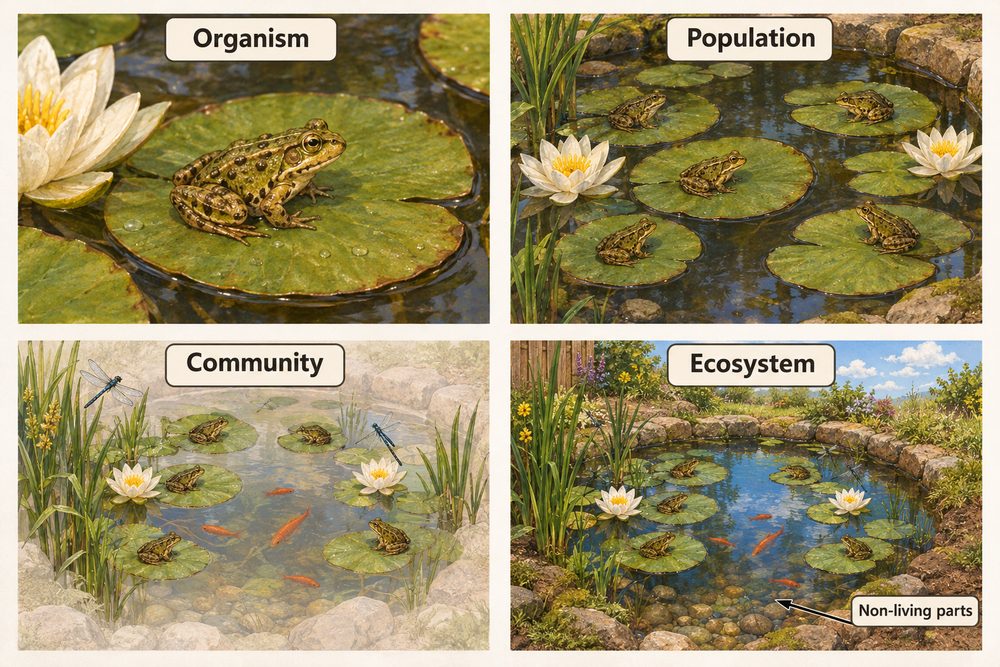
Abiotic factors are non-living conditions that influence where organisms can live. These include light intensity, temperature, moisture level, soil pH and mineral content, wind speed and direction, and carbon dioxide levels (for plants) or oxygen levels (for aquatic organisms).
Biotic factors are living factors that affect organisms in an ecosystem. These include availability of food, the introduction of new predators or competitors, and the arrival of new pathogens (disease-causing organisms). Changes in any biotic or abiotic factor can affect the distribution and population size of species in a community.
Competition and Interdependence
Organisms within a community compete for resources. Animals compete for food, territory, mates and water. Plants compete for light, water, space and mineral ions from the soil. If two species are competing for the same niche, one will usually out-compete the other. Within a community, species depend on each other for food, shelter, seed dispersal and pollination — this is called interdependence. If one species is removed, the whole community can be affected.
A stable community is one where all the species and environmental factors are in balance so that population sizes remain roughly the same. Examples include tropical rainforests and ancient oak woodlands. In these ecosystems, the populations of predators and prey, producers and consumers are balanced over time.
Feeding Relationships and Trophic Levels
Trophic levels describe the position of an organism in a food chain. Producers (usually green plants or algae) are at trophic level 1 — they photosynthesise to make their own food. Primary consumers (herbivores) eat the producers and are at trophic level 2. Secondary consumers (carnivores) eat the primary consumers and are at trophic level 3. Tertiary consumers are at trophic level 4.
Producers are the starting point of all food chains because they transfer energy from the Sun into biomass through photosynthesis. All consumers depend — directly or indirectly — on producers for their energy.
Predators kill and eat other animals (their prey). In a stable community, the populations of predators and prey rise and fall in cycles. When the prey population increases, more food is available for predators, so the predator population also increases. This then causes the prey population to fall (more are eaten), which in turn causes the predator population to decline. This repeating pattern is known as the predator-prey cycle.
Decomposers (mainly bacteria and fungi) break down dead plant and animal matter through the process of decay. This returns mineral ions and nutrients to the soil, where they can be taken up again by plants. Decomposition is faster in warm, moist, aerobic conditions. Decomposers are essential for nutrient cycling in ecosystems.
Energy is transferred along food chains, but not all energy passes from one trophic level to the next. At each level, energy is lost to the surroundings through life processes — organisms use energy for movement, keeping warm, and other metabolic reactions. Energy is also lost in waste products (faeces and urine) and through respiration. This is why food chains rarely have more than four or five trophic levels — there is not enough energy left to support organisms beyond that point.